GENERATION OF COMPUTERS
WHAT IS COMPUTER ;
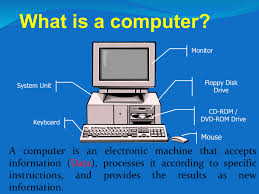
> A computer is a machine. that can store and process information.
> Most computers rely on a binary system, which uses two variables, 0 and 1, to complete tasks such as storing data, calculating algorithms, and displaying information.
> Computers come in many different shapes and sizes, from handheld smartphones to supercomputers weighing more than 300 tons.
FIVE GENERATION OF COMPUTER’S ;

> First Generation: Vacuum tubes[1940-1956]
> Second Generation: Transistors[1956-1963]
> Third Generation: Integrated Circuits[1964-1971]
> Fourth Generation: Microprocessors[1971-PRESENT]
> Fifth Generation: Artificial Intelligence[PRES NT TO BEYOND]
FIRST GENERATION ;
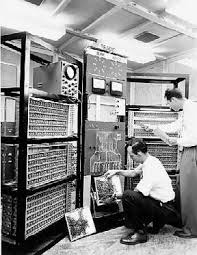
> the first computers generated a lot of heat, which was often the cause of malfunctions.
> The maximum internal storage capacity was 20,000 characters.
> First-generation computers relied on machine language, the lowest-level programming language understood by computers, to perform operations, and they could only solve one problem at a time.
> It would take operators days or even weeks to set up a new problem. Input was based on punched cards and paper tape, and output was displayed on printouts
SECOND GENERATION ;
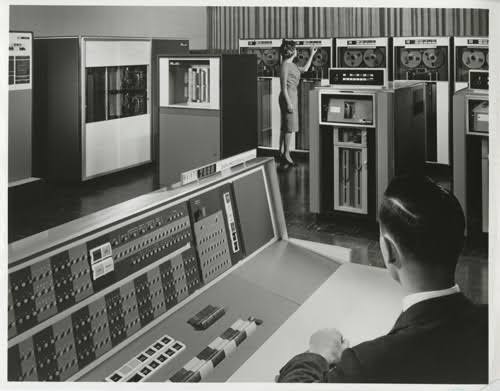
> The main electronic component used in the computers of the 1950s to 1960s era were transistors.
> The main memory storing units were magnetic tape or disk and magnetic core.
> The assembly language was used as the programming language.
> The sizes were smaller as compared to those of the first generation and they used to consume low power and generate less heat.
>There was an improvement in speed.The input/output devices were magnetic tape and punched cards.
THIRD GENERATION ;
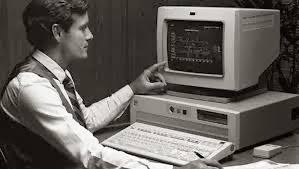
> The main electronic components used in the computers of the era 1060s to 1970s were integrated circuits ICs.
> The memory storing units were the magnetic disk or take and a large magnetic core.
> High-level languages such as BASIC, COBOL, Pascal were used as the programming language.
> The sizes were smaller and efficient and the computers were called minicomputers.
> There was an improvement in reliability and speed as compared to the second generation of computers.
> The input/output devices were keyboards, magnetic tape monitor, printer, etc.
FOURTH GENERATION ;
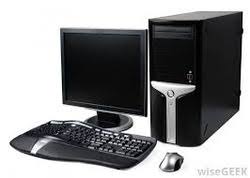
> the fourth generation of computers are microprocessors and very large scale integration (VLSI).
> When thousands of transistors are attached to a single microchip, it is known as VLSI.
> Semiconductor memory storage units such as RAM, ROM, etc were introduced.
> RAM (random-access memory)- Temporarily stores the programs and data and the contents are lost when the computer is shut down.
> ROM (read-only memory)- Permanently stores the data and programs and the contents are retained even after shutting down the computer.
>High-level languages such as C#, JAVA, Python, JavaScript are used as programming languages
>The sizes are smaller and the speed has improved.
> The input/output devices are a monitor, mouse, keyboard, printer, and so on, etc…
FIFTH GENERATION ;
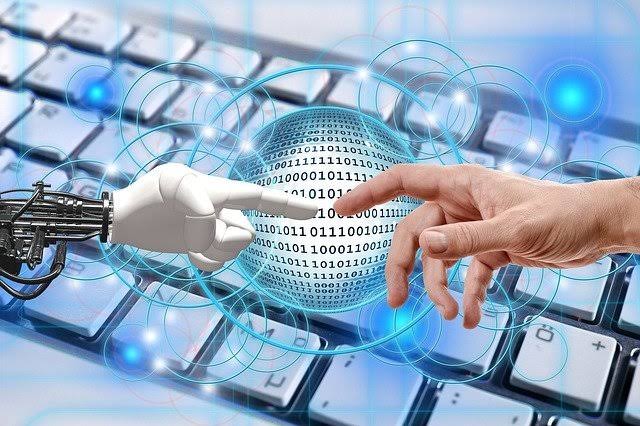
> the present generation of computers is Artificial Intelligence which uses the parallel processing method and the Ultra-Large Scale Integration (ULSI).
> The fifth generation of computers understands the natural human language.
> The speeds are really fast and the sizes are also small.
> The fifth-generation computers are portable and have a huge storage capacity.
> The input/output devices are keyboards, monitors, touchscreen pens, printers, light scanners, and so on.
> Examples are laptops, desktops, tablets, smartphones, etc.
BENEFITS OF COMPUTER’S ;
> The benefits of using computers involve multitasking. With the help of computers, people can do multiple works at the same time.
> Computers have the tendency to perform millions or billions of tasks in 1 second which help the users to finish their tasks in just a few seconds.
> The data is secured on the computer without any risk.
> People can store a great number of files on the computer instead of carrying so many paper files.
> The use of computers the level of productivity of a person gets doubled or tripled since the work can be done really fast.

 SEE JAVA